Lynnwood Homeowner's Guide: Avoiding Costly Deck & Pavilion Mistakes
Discover the most critical deck and custom pavilion mistakes Seattle and Lynnwood homeowners make, from moisture trapping to permitting oversights, and how to build a four-season space that lasts.
Mastering Outdoor Living in Lynnwood and Greater Seattle
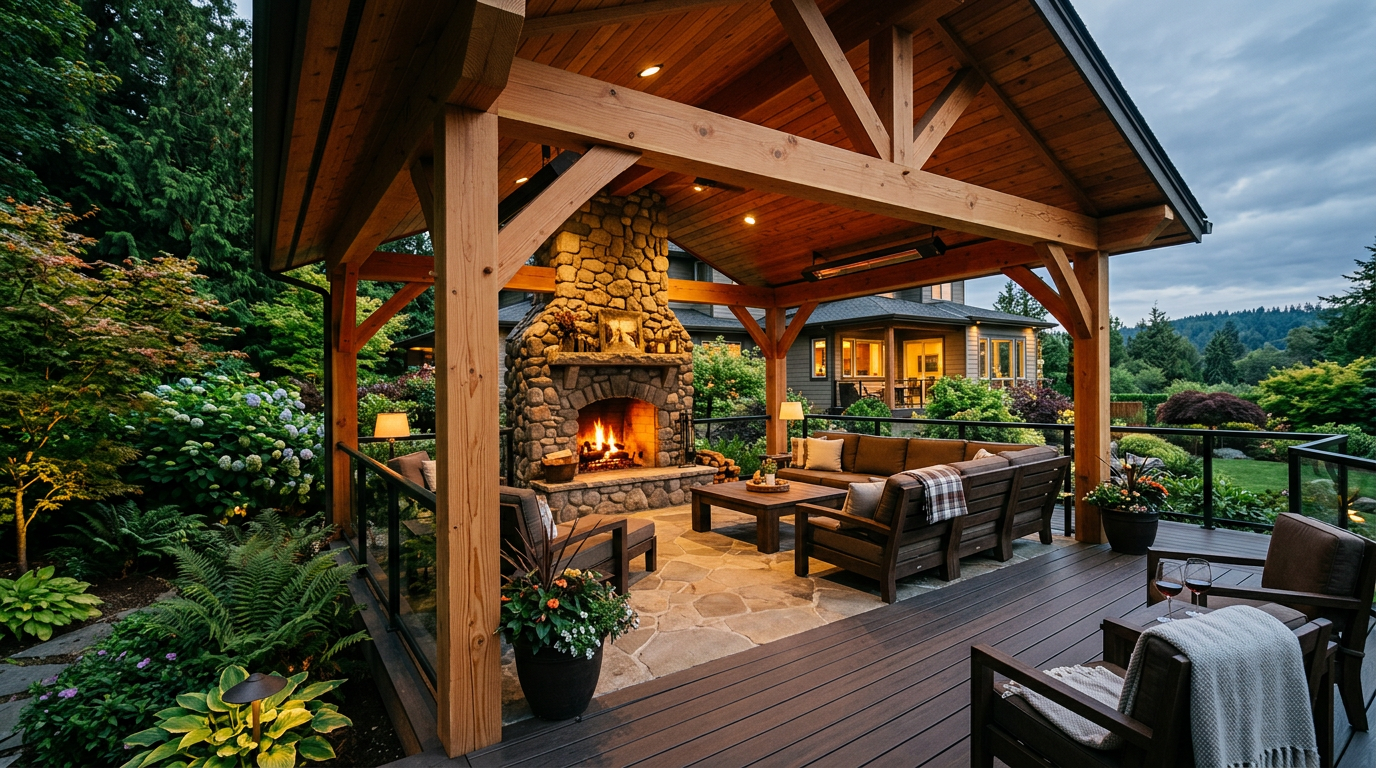
A well-crafted deck or timber-frame pavilion transforms your backyard into a true four-season living room. In the Pacific Northwest, having an outdoor space sheltered from steady drizzle and wind allows homeowners to enjoy fresh air almost every month of the year. Whether you are envisioning a warm cedar deck or a grand custom pavilion with an outdoor fireplace and heaters, design choices matter immensely.
However, the maritime climate around Seattle and Snohomish County creates unique structural challenges that many builds fail to anticipate. Relentless moisture, seasonal freeze-thaw cycles, and occasional heavy snow can quickly undermine poorly planned outdoor structures. By understanding the most frequent pitfalls early in the design phase, you can ensure your outdoor living investment remains safe, stunning, and rot-free for decades.
Underestimating Moisture Management and Drainage
The number one threat to outdoor structures in Western Washington is trapped water. Homeowners often focus exclusively on top-level aesthetics like board colors and furniture placement, while neglecting substructure ventilation and drainage. Fastening decking tight against siding without proper flashing or failing to leave appropriate gaps between boards invites standing puddles, algae buildup, and premature framing decay.
To avoid structural rot, every exterior ledger board requires robust, self-adhering membrane flashing and corrosion-resistant hardware. For covered pavilions, integrated gutter systems and strategically sloped rooflines prevent runoff from cascading back toward the foundation or living areas. High-performance joist tape and properly spaced framing members allow damp wood to breathe and dry out between rainy spells.
Choosing Materials Unsuited for the Maritime Climate
Not all decking and structural timbers perform equally when subjected to extended winter wetness. Selecting untreated softwoods or budget composite lines with open-cell cores often leads to swelling, mildew discoloration, and surface degradation within just a few seasons. Even natural woods require thoughtful grading to survive our microclimates.
Naturally rot-resistant Western Red Cedar, tight-knot architectural timbers, and fully capped composite or PVC decking offer superior longevity in Puget Sound conditions. Premium capped composites resist surface mold and require minimal scrubbing, while heavy timber framing withstands moisture without twisting. Investing in climate-tested materials saves substantial time and money on continuous staining and premature board replacement.
Overlooking Local Permitting and Engineering Codes
Because a covered pavilion or elevated deck carries significant mass, skipping the engineering and permitting phase is a costly error. In Lynnwood, Seattle, and across neighboring municipalities, building codes demand rigorous structural calculations for lateral wind resistance and snow loads. Unpermitted structures risk stop-work orders, costly teardowns, and serious complications when refinancing or selling your property.
Professional design-build teams engineer every post, beam, and connection to meet or exceed municipal building standards. Heavy pavilion roofs, especially those supporting cedar shakes, metal standing seams, or tongue-and-groove ceilings, require precise footing depths and soil bearing evaluations. Securing the proper permits protects your home value and guarantees family safety during severe winter windstorms.
Ignoring Natural Traffic Flow and Functional Layout
Another common misstep is treating an outdoor room as an isolated feature rather than an intuitive extension of your interior floor plan. Homeowners frequently build platform decks that are too narrow for dining sets, or position pavilion posts right in line with primary garden sightlines. A lack of dedicated transition zones between the kitchen door, cooking stations, and lounge seating makes outdoor gatherings feel cramped.
Before breaking ground, map out distinct zones for grilling, conversation, and circulation. Ensure sliding doors open freely without bumping outdoor tables, and maintain at least three to four feet of clear walkway around all furniture groupings. An intentional layout lets guests mingle effortlessly between the shelter of your pavilion and the open yard.
Designing Without Integrated Four-Season Comfort
An unheated, poorly lit pavilion often sits abandoned from October through April. Many homeowners build a handsome roof structure but fail to run underground electrical conduits during excavation. Adding flush-mount overhead infrared heaters, ceiling fans, and ambient step lighting as an afterthought is significantly more expensive and visually disruptive once finishes are complete.
Planning utilities early allows you to conceal wiring inside hollow-core structural posts or behind cedar soffits. Directional landscape lighting, recessed pavilion downlights, and dedicated 240-volt circuits for radiant heaters create an inviting ambiance on crisp autumn evenings. Incorporating an outdoor stone fireplace or fire table anchors the room and draws friends outdoors even on chilly winter nights.
Build It Right from the Foundation Up
Creating an enduring deck or custom pavilion requires an artisan touch backed by deep technical knowledge of Pacific Northwest building conditions. From soil preparation and concrete footing depth to custom timber joinery, every detail matters. Partnering with a dedicated design-build contractor ensures your Lynnwood or Seattle outdoor space is as durable as it is breathtaking.
The team at GMC Landscapes LLC specializes in premium cedar, composite, and timber-frame structures tailored to Northwest life. If you are ready to expand your home with an engineered outdoor living space, call 206-465-0501 today or reach out online to request your free, comprehensive project estimate.
Keep reading